
4 Steps to a Killer Research Idea (Research Proposal Tips)
Oct 05, 2026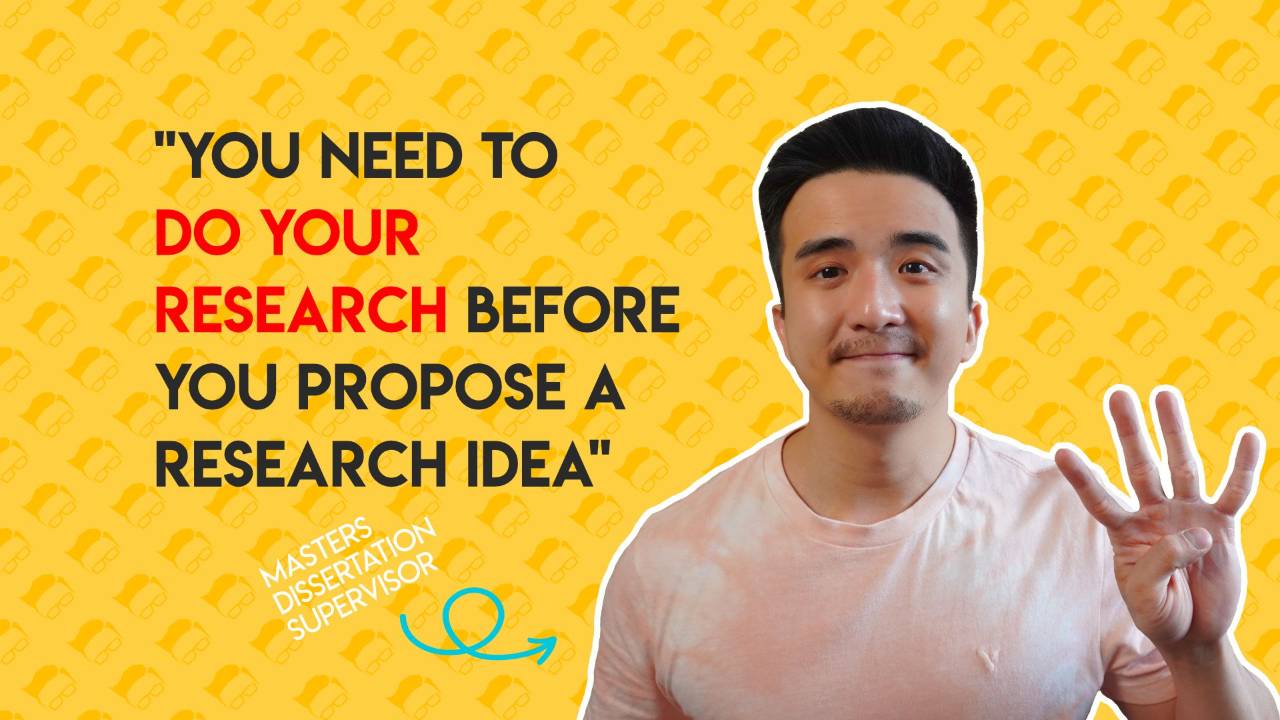
A viable research idea requires more than choosing an interesting topic. You need to research the topic before proposing it, identify a genuine research gap, establish why the research is needed and check that the project is feasible within your Masters or PhD programme.
How do you find a general research topic?
Start by revisiting previous modules or assignments. Choose a topic that interested you or an assignment you performed well in. This gives you a head start because you are already familiar with the subject.
You can also look at issues you have encountered in your workplace or complaints from colleagues. These real-world problems can inspire practical and meaningful research topics.
Consider what you would like to learn more about and whether this aligns with your future career goals, job changes, promotions or professional development. Masters students can also consider whether a topic could develop into a future PhD proposal. PhD students may want to think about how the topic could contribute to future teaching or research opportunities.
At this stage, you only need a general topic or area of interest. If you are choosing between two or three ideas, pick the one you are most drawn to and use the next stages to assess its feasibility. You can always move to another idea if it does not work.
What preliminary research should you do on a research idea?
Once you have chosen a general topic, narrow it down through preliminary research. This stage is important because skipping it can lead to wasted time if you later have to change your research idea.
There are three steps:
-
Start with a general overview. Read broadly to understand the key themes and identify potential subtopics. Resources such as Wikipedia and generative AI can help at this early stage. Once you identify an interesting subtopic, move on.
-
Dive into literature reviews. Start with systematic and scoping reviews to understand what research has already been conducted and where gaps may exist. You can also follow up by reading some of the studies identified in these reviews.
-
Read the latest research. Search academic databases relevant to your field and focus on recent articles. In healthcare, examples include PubMed, Scopus and CINAHL where your university provides access. Experiment with search terms to understand what is known and what remains unknown.
How do you establish whether research is needed?
You need to build a case for why your research is necessary. Your preliminary research should help you answer four key questions:
Why is this research important? Explain why anyone should care about the topic and what problems might arise if the research is not conducted.
Where is the research gap? Identify a gap in the current research that your study will address.
Why isn't prior research generalisable to your idea? Similar studies may already exist in a different population or context. You need to explain why those studies do not fully address your proposed focus. A small difference does not automatically justify new research.
What is the value of your research? Research gaps are numerous, while research resources are limited. Consider the societal benefits your research could offer, such as improving patient care, informing policy or addressing a pressing problem.
If you can confidently answer these four questions using your preliminary research, you have established a strong academic rationale for your idea. If you cannot, return to the previous stage and gather more information.
What makes a research idea feasible for a Masters or PhD?
A strong research idea also needs to be feasible within the constraints of your programme. Consider five areas:
-
Time frame: Can the research be completed within the available time? A Masters research phase may have only 2–4 months, while a full-time PhD may need the actual research completed within 1–1.5 years alongside reading, writing and editing.
-
Access to participants: Can you access the population required for your data collection? Permissions can take time and may significantly delay the project.
-
Ethical approval: Consider what ethical approvals are required. For example, NHS ethical approval can take 6–9 months, potentially making some projects unfeasible for Masters students.
-
Risks to you or participants: Universities consider ethical, physical, psychological and emotional risks. Research involving sensitive topics or vulnerable or potentially dangerous populations may become more complicated.
-
Methodological fit for your skill level: Your methodology needs to match your skills and programme expectations. Complex approaches such as mixed methods or meta-analysis may be difficult for students who are new to research.
If any of these areas raise concerns, you may need to rethink or adjust your research idea.
Should you use FINER criteria to assess a research idea?
FINER stands for feasibility, interest, novelty, ethical and relevant. Many universities use FINER criteria to assess the viability of a research topic and its rationale.
However, FINER is most useful after you have researched the topic. The earlier stages have already helped you investigate the research landscape, identify gaps, consider the importance and value of the research, and examine practical constraints.
You can therefore use FINER at the end to review your idea. If you have followed the earlier stages, you will already have addressed many of these considerations.
Developing a research idea takes effort because you need to do some research before you can even propose the research. Working through these stages can help you develop a viable research idea and potentially avoid having to revise and re-propose your project later.
