
The PERFECT Research Plan with my FREE Gantt Chart Template
Oct 05, 2026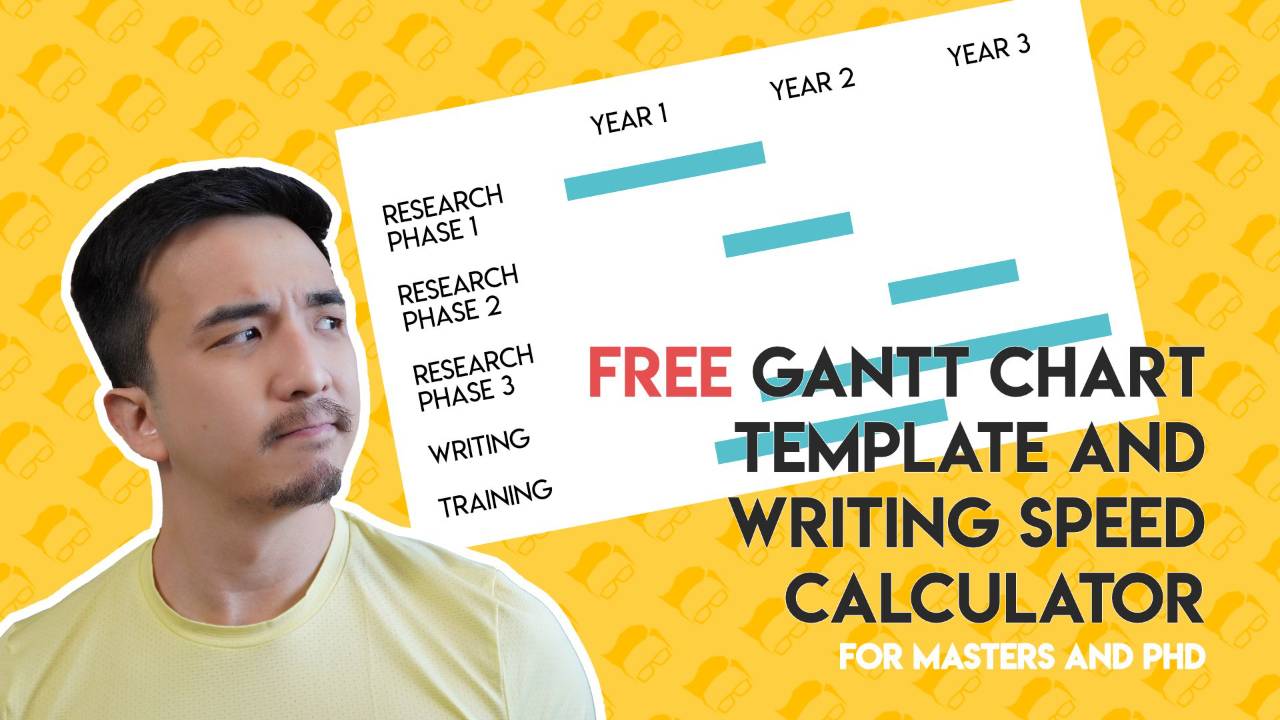
A research Gantt chart helps Masters and PhD students plan research activities, writing, deadlines and other commitments across the life of a research project. The most useful Gantt charts are realistic, detailed enough to guide your work, and regularly updated as your research develops.
How should you set up the time frames in a research Gantt chart?
Time frames depend on the length of your research project. For full-time PhD students, the university may expect completion within three or four years, so a monthly Gantt chart gives you a broader overview. For Masters students, research projects may last from around four months to a year, so a weekly Gantt chart is more practical.
Set the actual dates for your research rather than simply using labels such as “week 1” or “week 2”. As a marker, I need to know when those weeks actually begin.
You should also mark important deadlines, such as proposal and dissertation submissions, annual reviews, and ethics application deadlines.
For international students, consider other periods that may affect your availability or productivity, such as religious obligations, extended trips home, or periods of particularly heavy work commitments. You can also mark planned breaks and school holidays. The more realistic your initial Gantt chart is, the more useful it will be.
What research activities should you include in a Gantt chart?
Research processes differ between students, but you can usually organise your activities into four broad phases:
-
Literature review – searching for literature, selecting and analysing sources, and completing additional stages if you are conducting a systematic or scoping review.
-
Research design – developing research questions, aims and objectives, deciding on methodology and methods, developing your proposal, obtaining gatekeeper permissions and preparing ethics applications.
-
Data collection – participant recruitment and data collection, alongside activities specific to your design. This might include transcription, translation, member checking, or quantitative data processing and cleaning.
-
Data analysis – the specific analysis steps required by your methodology, such as thematic analysis or statistical testing, followed by post-analysis activities such as developing discussion topics.
The level of detail you can include depends on where you are in your research journey. Early in the process, some activities may only have vague time frames. For a proposal or ethics application, however, you should have a much clearer plan.
How should writing be included in a research Gantt chart?
Writing should have its own section because it can otherwise become difficult to see what needs to be written and when.
For a thesis or dissertation, you might include the introduction, background, literature review, methods, findings or results, discussion and conclusion. However, the introduction is usually better written towards the end, alongside the conclusion, once you know what your research actually looks like.
You should also calculate your writing time based on your own writing speed. If you know how long it takes you to write 1,000 words, you can use that figure to estimate the time required for different chapters. Remember that this represents focused writing time, so you also need to account for planning, editing and the limits of how many hours you can realistically write each day.
Writing should happen throughout the research rather than being left until the end. You can write your literature review while your literature search is still underway, methods while conducting or analysing data, and findings and discussion after analysis.
Once you have a first draft, include time for supervisor feedback, revisions, proofreading and formatting.
What additional activities should PhD students include?
For PhD students, research and writing are only part of the work. You may also need to plan research skills training, conference attendance and publications.
These activities can be included in your Gantt chart alongside your research commitments. Planning them helps you prioritise your development without trying to complete every training activity at once.
You may also need to include annual review submissions and other university requirements. Where possible, these do not necessarily need to become completely separate writing projects. Depending on your university requirements, you may be able to use and adapt work you have already produced for your research.
If you're applying this planning approach to your own research and want a second pair of eyes, you can find research support here.
How should you keep a research Gantt chart updated?
A research Gantt chart is a living document. As your research progresses, you will have a better understanding of how long activities take and which tasks need to be prioritised, so the chart needs to be reviewed and updated.
An old Gantt chart can become unhelpful if you continue judging your progress against a plan created several years ago. You should also continue to account for periods when you may be less focused or less available.
It is useful to keep two versions. One can contain your research and writing activities for formal purposes. The other can be a more detailed personal version containing holidays, training, work commitments and other matters that affect your time.
Your Gantt chart should reflect the time you actually have available. The purpose is to help you plan realistically, rather than create targets that cannot be met.
